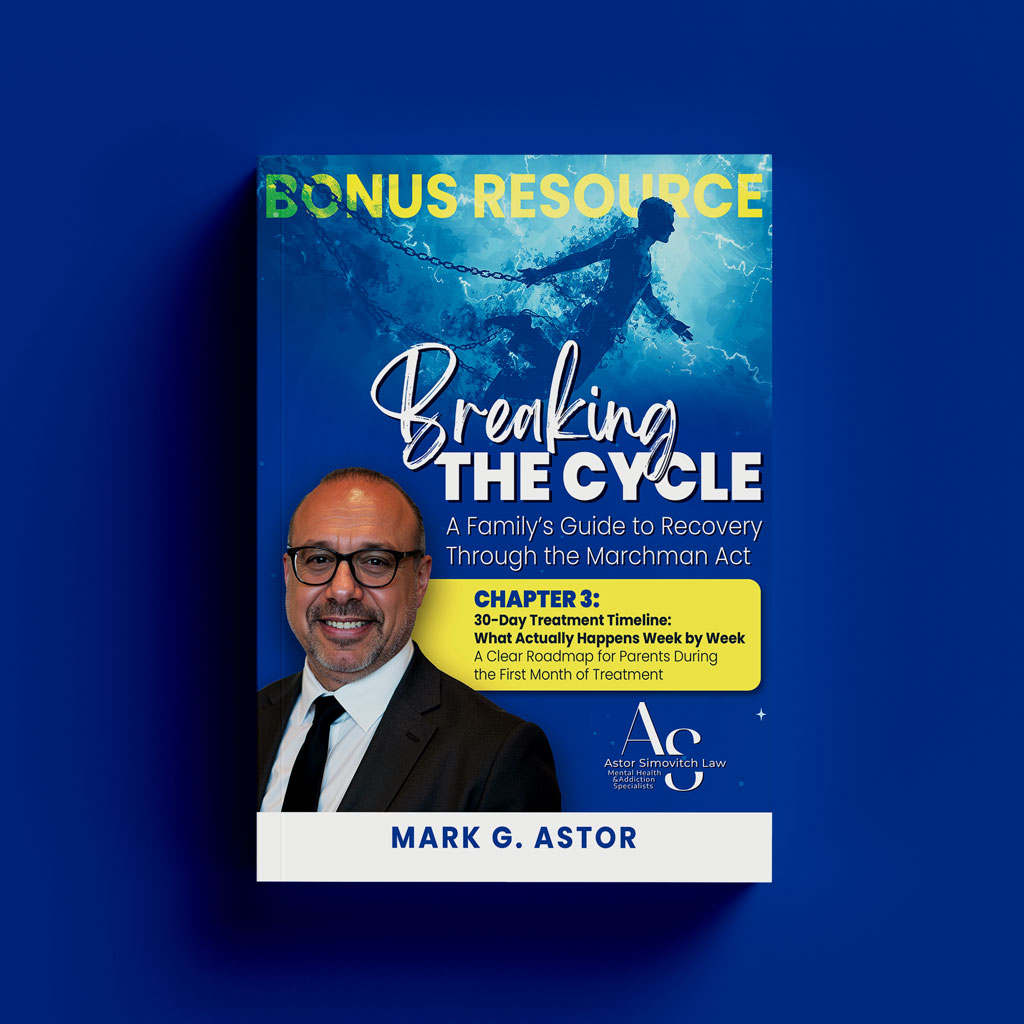
Chapter 3 Bonus — Astor Simovitch Law
What Actually Happens Week by Week During the First 30 Days of Treatment
A calm, structured picture of what the first month really looks like — so you can stay steady while your loved one adjusts to the structure that’s saving their life.
Get the Timeline
Free. Instant. No pressure.
No judgement. No pressure. Just clarity.
The First 30 Days —
What They Are and What They’re Not
Parents who understand this stay grounded through the toughest early days.
WHAT THEY ARE:
- A medical and emotional stabilization period
- A forced pause in the addiction cycle
- The beginning of clarity — not the end of chaos
- A time where staff closely watch for patterns, withdrawal, and risk factors
WHAT THEY ARE NOT:
- A cure
- A linear, predictable process
- A guaranteed moment of gratitude from your loved one
- A steady upward climb
The 30-Day Timeline
Your loved one’s path may shift — but the emotional stages rarely change.
Week 1 — Stabilization + Withdrawal + Resistance
What you’ll see: Physical withdrawal, irritability, anger, sleep disruption, complaints about staff and rules. “I don’t belong here.” What this really means: Their brain is fighting for the familiar pattern of use. This week is about medical safety and breaking routine. What parents think: “They’re miserable. Maybe this isn’t the right place.” Reality: This is the most common week for second-guessing. It’s normal.
Week 2 — Clarity Returns (Slowly) + Emotional Flooding
What you’ll see: Mood swings, sudden crying, shame surfacing, blaming family. “I’ll do outpatient instead — I don’t need this level of care.” What this really means: As the fog lifts, emotions return — sometimes all at once. This can feel worse than Week 1, but it’s progress. Parent trap: Trying to “fix” their emotions too quickly. Reality: Let the staff guide this part. Emotional turbulence = healing.
Week 3 — Engagement Begins + Pushback Lessens
What you’ll see: More participation in groups, more honest reflections, stronger connection with peers, fewer fights about rules. What this really means: The structure is finally settling in. Their brain is recalibrating. Parent trap: Expecting permanent change immediately. Reality: Week 3 is the first sustained step in the right direction — not the finish line.
Week 4 — Initial Stability + Planning for Next Steps
What you’ll see: Clearer thinking, insight into how serious the addiction was, early readiness for aftercare, questions about going home. What this really means: Your loved one is stabilizing — mentally, physically, and emotionally. But cravings and triggers are still strong. Parent trap: Believing the “good week” means they’re ready to come home early. Reality: The risk of relapse is highest when structure is removed too soon.


Red Flags vs. Normal Behavior During Treatment
NORMAL (even if it feels scary):
- Complaining about rules
- Saying they hate it
- Asking to leave early
- Blaming the family
- Emotional outbursts
- Saying “I’m not as bad as the others”
RED FLAGS (tell staff immediately):
- Talk of self-harm
- Refusal to participate in all activities
- Attempts to manipulate discharge
- Sudden isolation after Week 2
- “I don’t want to live anymore” language
What parents say
“Mark was the first person who actually listened. I didn’t feel judged or rushed. He helped me understand what was really happening and why my loved one wasn’t getting better. I walked away feeling calmer than I had in months.”
— Mother of a young adult, Broward County
“Going through this process was the hardest thing I’ve ever done as a parent, but it saved my loved one’s life. Today we have our family back. I don’t know where we’d be if I hadn’t reached out.”
— Mother, Fort Lauderdale
“I was falling apart inside. Mark talked to me like a human being, not a case. For the first time, I felt like I wasn’t carrying this alone.”
— Parent, West Palm Beach
You Don’t Have to Interpret This Alone
You don’t have to guess whether what you’re seeing is normal. Call us before making any big decisions — we’ll walk through what you’re hearing, what’s normal at this stage, and what to expect next.
No selling. No pressure. Every family’s situation is different — and a five-minute conversation can keep you from a decision that derails their progress.