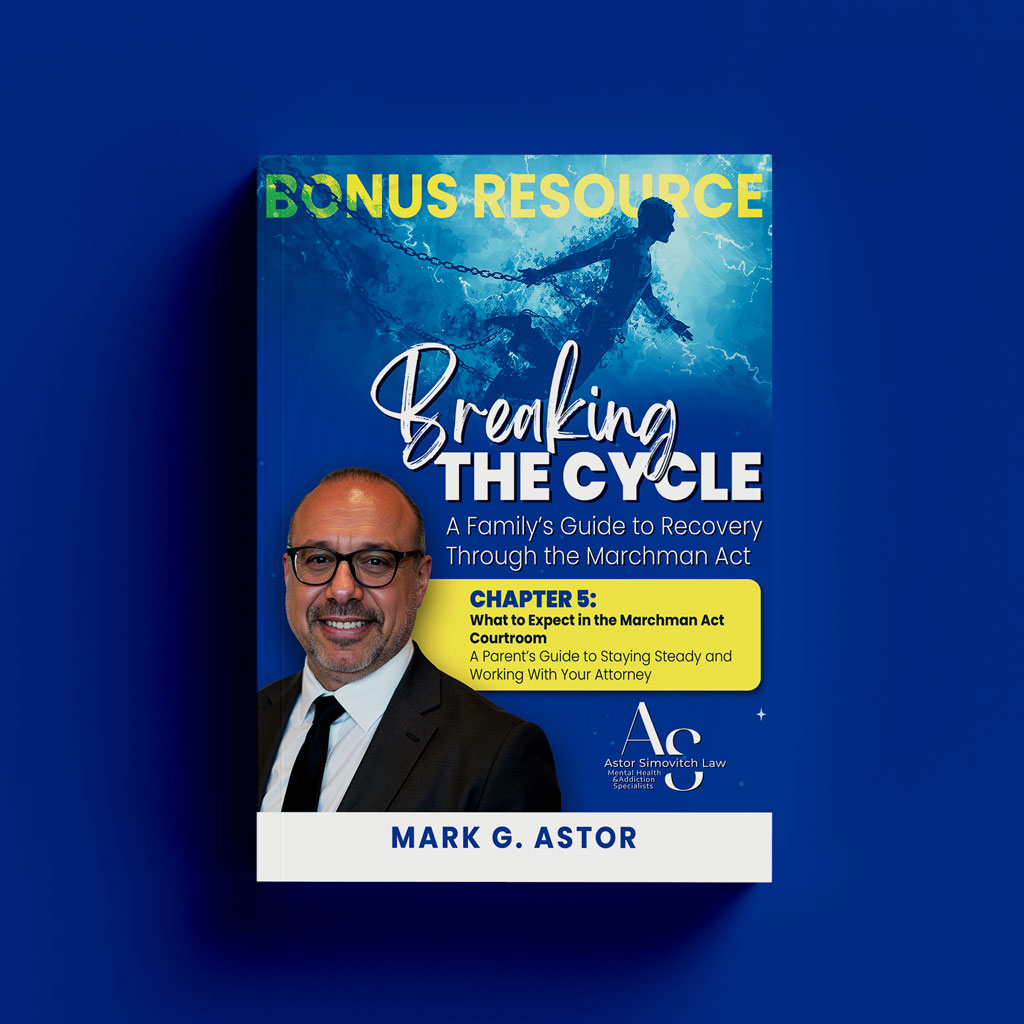
Chapter 5 Bonus — Astor Simovitch Law
What Actually Happens on Hearing Day — and How to Walk In Ready
The courtroom isn’t what you’re imagining. Here’s the calm, honest picture of what to expect — and why your only job is to show up.
Get the Guide
Free. Instant. No pressure.
No judgement. No pressure. Just clarity.
It’s Not What You’re Picturing
Parents often imagine drama, confrontation, and chaos. The reality is much calmer.
WHAT IT REALLY IS:
- The judge is focused on safety — not blame
- You are not on trial
- Your loved one is not being punished
- The process is structured and predictable
- Your attorney does almost all of the speaking
- The goal is stability and care — not shame
What This Guide Prepares You For
This isn’t a legal manual. It’s an emotional preparation guide — so you walk into that room grounded, clear, and supported.
Your role in the courtroom
Your job is to stay calm, stay clear, and follow your attorney’s cues. You are not expected to argue, persuade, or convince anyone of anything. This guide shows you exactly what that looks like.
What your attorney handles
Legal strategy, petition, all communication with the court, what gets presented, when you speak, and what you say — if anything. You’re supported the entire time.
What your loved one may do
They may appear angry, deny everything, promise to “do better,” or say things that hurt. This guide helps you understand what that behavior really means — and how not to let it derail the process.
Common fears — and the truth
“What if the judge thinks I’m overreacting?” “What if I say something wrong?” “What if my loved one gets mad at me?” This guide answers every one of them honestly.


The Only Five Things You Need to Focus On
When you trust the structure, you don’t have to carry the day on your shoulders.
FIVE STEPS:
1 — Breathe and slow down Courtrooms feel serious, but the process is controlled and calm.
2 — Let your attorney guide everything They will signal when to sit, stand, speak, or stay silent.
3 — Don’t react emotionally to your loved one Your steadiness helps your attorney stay in control of the narrative.
4 — Avoid explaining or justifying anything Your attorney handles all context. Emotion muddies the water.
5 — Remember why you’re here Not for punishment. Not for control. For safety, stabilization, and the chance for your loved one to live.
What Your Mind Will Tell You — and the Truth Behind It
“What if the judge thinks I’m overreacting?”
Judges see addiction-related decline every week. They know the signs.
“What if my loved one gets mad at me?”
They might. But they’re alive. Recovery makes space for forgiveness — addiction does not.
“What if I say something wrong?”
Your attorney protects you from this. You won’t be speaking alone.
“What if the court denies the petition?”
Even then, you gain clarity and direction for next steps with your attorney.
What parents say
“Mark was the first person who actually listened. I didn’t feel judged or rushed. He helped me understand what was really happening and why my loved one wasn’t getting better. I walked away feeling calmer than I had in months.”
— Mother of a young adult, Broward County
“Going through this process was the hardest thing I’ve ever done as a parent, but it saved my loved one’s life. Today we have our family back. I don’t know where we’d be if I hadn’t reached out.”
— Mother, Fort Lauderdale
“I didn’t have to explain the chaos — he already understood it. He just got it. He made me feel normal again, like I wasn’t losing my mind.”
— Father, Orlando
You Do Not Have to Walk Into That Room Alone
Call us before you go any further. We’ll talk through what to expect, how to stay calm, what role you’ll play, and how we’ll support you through every step.
No pressure. No judgment. Just a steady hand in a moment that feels anything but steady.