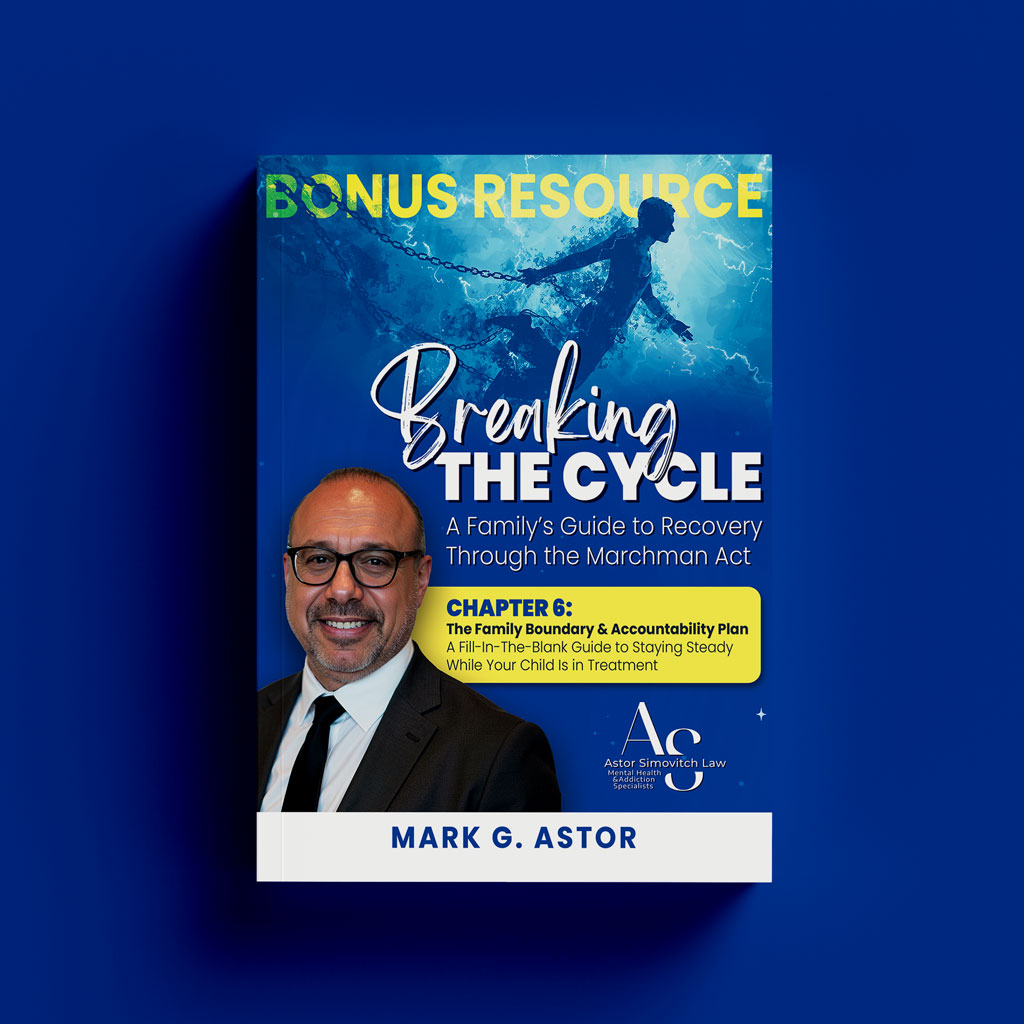
Chapter 6 Bonus — Astor Simovitch Law
The Family Boundary & Accountability Plan — So Everyone in the Home Stays Steady
A simple, structured framework that reduces conflict, removes improvisation, and keeps your home stable while your loved one gets better.
Get the Plan
Free. Instant. No pressure.
No judgement. No pressure. Just clarity.
Addiction Thrives in Inconsistency. Recovery Thrives in Structure.
Your loved one may test limits, use guilt, or push emotional buttons — not because they’re manipulative, but because their brain is still rewiring and reaching for old patterns. A clear plan keeps your home from becoming the battlefield.
WHAT A BOUNDARY PLAN DOES:
- Reduces conflict
- Removes improvisation
- Helps all caregivers stay unified
- Prevents emotional exhaustion
- Keeps the home stable
- Protects recovery
What the Plan Gives You
Fill-in-the-blank templates you can complete in one sitting — or build over time. No perfect answers required. Just honest ones.
Your “why”
Define what your family is protecting — safety, recovery stability, the emotional well-being of siblings, a predictable home. This becomes the foundation everything else is built on.
Non-negotiable boundaries
Three fill-in-the-blank boundaries that must be upheld 100% of the time — substance use in the home, aggressive behavior, disappearing without contact, and more.
Calm accountability steps
Pre-agreed responses for when each boundary is broken. Not punishments — structure. So no one has to improvise in a high-emotion moment.
Family communication rules
No yelling, no midnight arguments, 10-minute pause rule, weekly family meetings — whatever your home needs, written down and agreed on in advance.
Scripts for when they push back
Five word-for-word scripts for the moments parents freeze: when they negotiate, blame, guilt-trip, or break the boundary entirely.
Roles & responsibilities
Who handles what — and what your loved one is responsible for during treatment and early recovery.


Four Rules That Keep the Plan From Falling Apart
FOUR PRINCIPLES:
1 — Clarity beats emotion No ambiguity. No shifting rules based on mood or guilt. Everyone knows what the boundary is.
2 — Boundaries protect relationships Structure prevents arguments, resentment, and chaos — not just for your loved one, but for everyone in the home.
3 — Accountability is calm, not punitive “Here’s the boundary.” “Here’s the consequence.” Done. No lectures, no spiraling.
4 — Everyone in the home follows the plan Mixed messages undermine everything. Consistency is the whole game.
What to Say When They Push Back
Parents often freeze when their loved one tests the boundary. These five scripts stop the argument before it starts.
When they push the boundary:
“I hear you’re upset. The boundary still stands. We can talk when things are calm.”
When they try to negotiate:
“We’re not changing the boundary. Let’s focus on next steps instead of arguing.”
When they blame or accuse you:
“I’m not blaming you. I’m keeping the home safe. We can move forward when the boundary is respected.”
When they break the boundary:
“We’re following the plan. This is the response we agreed on. We’ll reset and try again tomorrow.”
When they use guilt:
“I know this is hard. I love you. The boundary is still the boundary.”
What parents say
“Mark was the first person who actually listened. I didn’t feel judged or rushed. He helped me understand what was really happening and why my loved one wasn’t getting better. I walked away feeling calmer than I had in months.”
— Mother of a young adult, Broward County
“Going through this process was the hardest thing I’ve ever done as a parent, but it saved my loved one’s life. Today we have our family back. I don’t know where we’d be if I hadn’t reached out.”
— Mother, Fort Lauderdale
“I was falling apart inside. Mark talked to me like a human being, not a case. For the first time, I felt like I wasn’t carrying this alone.”
— Parent, West Palm Beach
Before You Roll This Out, Talk It Through First
Every family’s dynamic is different. Every loved one reacts differently. The wrong boundary at the wrong moment can undo weeks of progress. A quick conversation can give you the clarity and confidence to follow through calmly — and avoid the most common mistakes families make at this stage.
No guessing. No pressure. We’ll help you get it right.