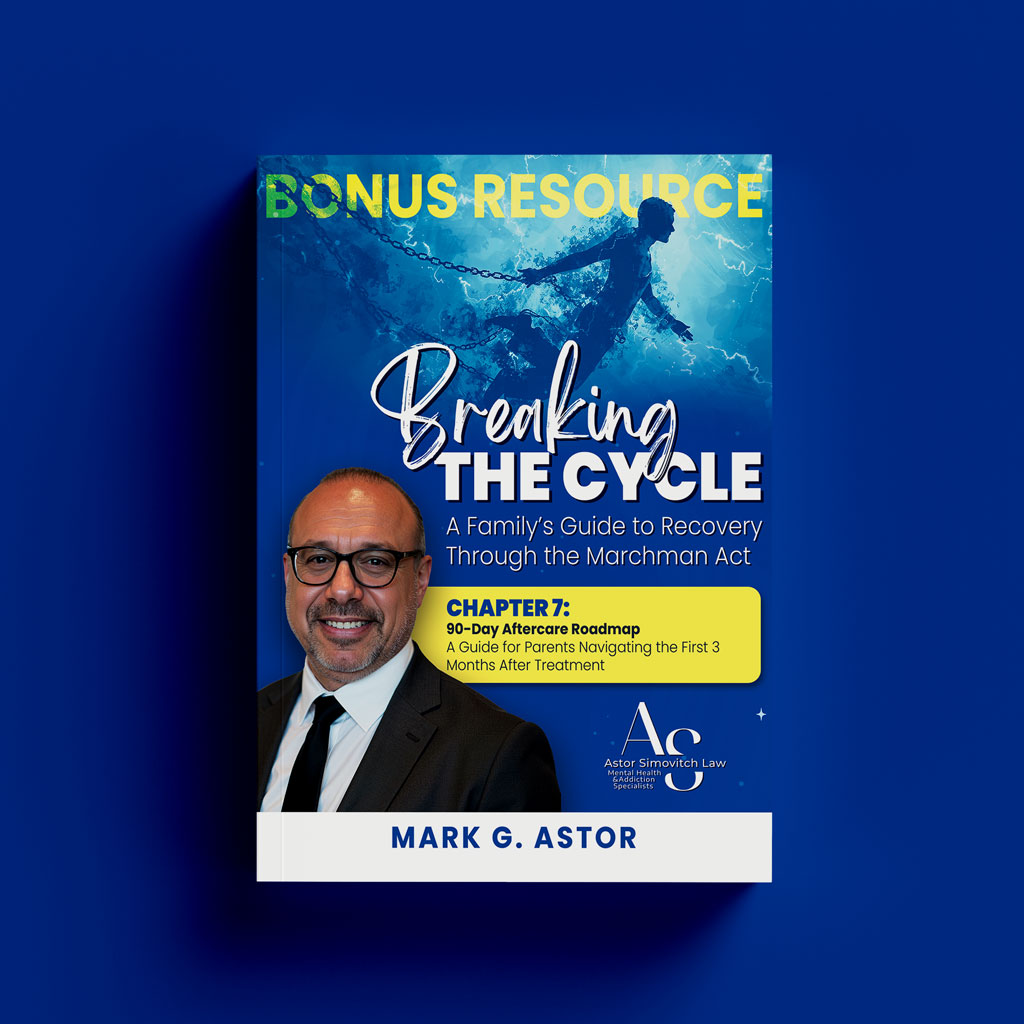
Chapter 7 Bonus — Astor Simovitch Law
The 90-Day Aftercare Roadmap — What to Expect After Your Loved One Comes Home
Early recovery isn’t about returning to normal. It’s about building a new, safer structure — and knowing how to stay steady while your loved one finds their footing.
Get the Roadmap
Free. Instant. No pressure.
No judgement. No pressure. Just clarity.
The First 90 Days Are the Most Fragile — and the Most Misunderstood
Parents often expect things to be “back to normal.” But your loved one is rebuilding brain chemistry, learning new coping skills, facing triggers without substances, and figuring out how to live with accountability. What looks like stubbornness or regression is usually just the normal turbulence of rewiring.
WHAT YOUR loved one IS NAVIGATING:
- Rebuilding brain chemistry
- Learning new coping skills
- Facing triggers without substances
- Re-entering real-life routines
- Figuring out how to live with accountability
What to Expect — Month by Month
Each stage is emotional, not procedural. Understanding what’s normal at each phase keeps you grounded when things feel uncertain.
Days 1–30 — Re-Entry + Vulnerability
What you’ll see: Emotional sensitivity, fatigue, anxiety about relapse, occasional irritability, over-apologizing or hiding feelings. What this really is: They’re relearning life without the old coping mechanism. Everything feels bigger than it is. What often goes wrong: Parents monitor too closely → power struggles. Your goal: Calm consistency and simple routines.
Days 31–60 — Adjustment + Growing Confidence
What you’ll see: Improved mood, more stable routines, better sleep, testing small limits, asking for more independence. What this really is: Their brain is stabilizing — but they don’t yet realize how fragile this stage still is. What often goes wrong: Giving too much freedom too fast because “they seem fine now.” Your goal: Consistency over comfort. Support without loosening boundaries prematurely.
Days 61–90 — New Habits + Real-Life Challenges
What you’ll see: Increased confidence, more stable communication, returning interests, trigger exposure at work and in social settings. What this really is: Recovery meets real life. Triggers show up and they practice new tools. What often goes wrong: Family conflict over expectations. Your goal: Stay predictable. Don’t assume confidence equals stability.


Some Days They’ll Look Solid. Some Days They Won’t. Both Are Normal.
The biggest mistake parents make at this stage is reacting emotionally instead of structurally.
WHAT NOT TO DO:
- Don’t panic
- Don’t accuse
- Don’t lecture
- Don’t pull back support
- Don’t loosen boundaries
WHAT TO DO INSTEAD:
- Stay predictable
- Use your communication rules
- Reach out for guidance before reacting
What to Say During the Hard Moments
When they’re overwhelmed:
“I hear you. This is a lot. We can take it one step at a time.”
When they ask for too much freedom too soon:
“I want you to have independence, but not at the cost of your safety. Let’s take this slowly.”
When they get defensive:
“I’m not attacking you. I’m staying consistent because recovery matters.”
When they downplay a concern:
“I’m not saying you’re failing. I’m saying I care enough to pay attention.”
When they want to skip a meeting or step:
“Let’s talk to your provider before making changes. We don’t have to decide this alone.”
What parents say
“Mark was the first person who actually listened. I didn’t feel judged or rushed. He helped me understand what was really happening and why my loved one wasn’t getting better. I walked away feeling calmer than I had in months.”
— Mother of a young adult, Broward County
“Going through this process was the hardest thing I’ve ever done as a parent, but it saved my loved one’s life. Today we have our family back. I don’t know where we’d be if I hadn’t reached out.”
— Mother, Fort Lauderdale
“I was falling apart inside. Mark talked to me like a human being, not a case. For the first time, I felt like I wasn’t carrying this alone.”
— Parent, West Palm Beach
You Don’t Have to Guess Your Way Through the Next 90 Days
If you’re second-guessing whether your expectations are too strict, too lenient, or too vague — call us. We’ll review your situation and help you shape a plan that fits your loved one’s stage of recovery. A quick conversation can keep a wobble from becoming a crisis.
Let us walk with you through the most critical part of your loved one’s recovery.