Chapter 8 Bonus — Astor Simovitch Law
When Something Goes Wrong —
This Is What You Do Next
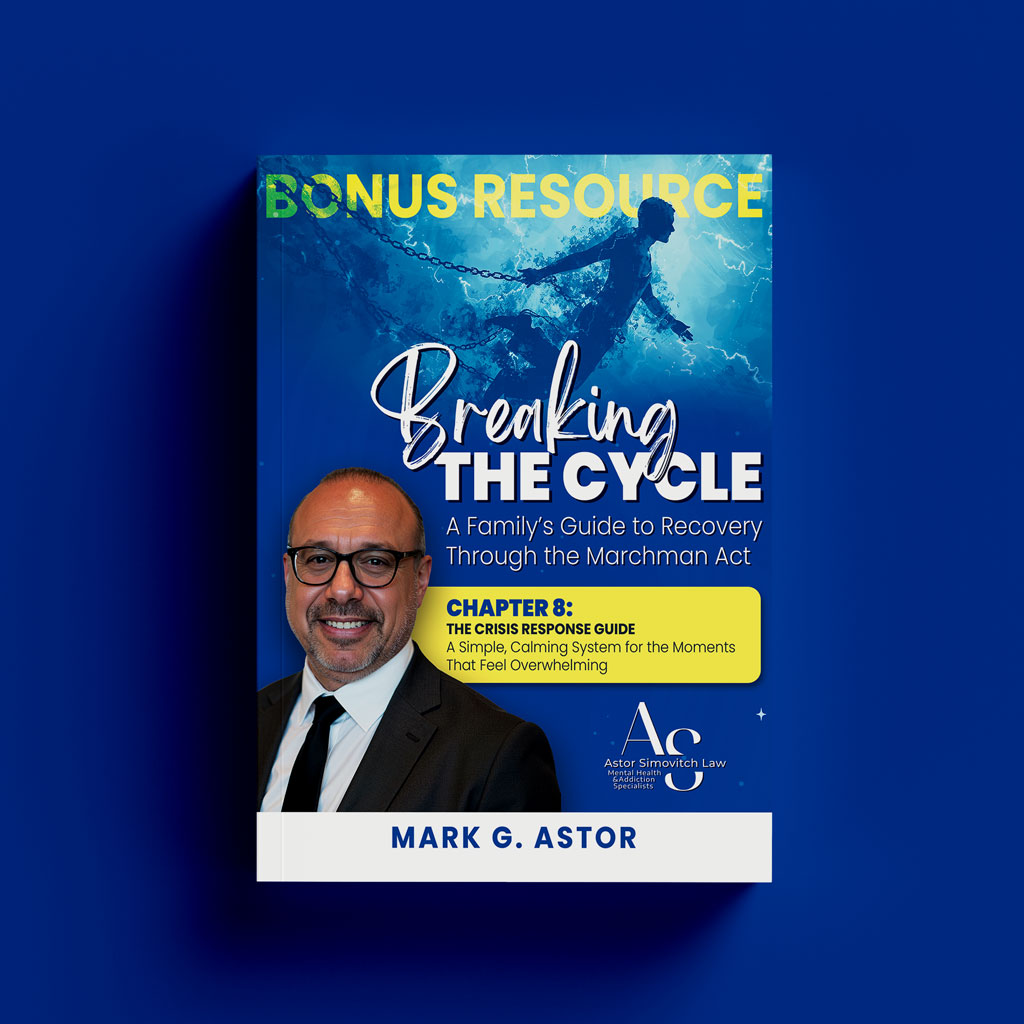
A clear, step-by-step crisis response guide for parents — so fear doesn’t turn a setback into a spiral.
Get the Guide
Free. Instant. No pressure.
No judgement. No pressure. Just clarity.
If You’ve Said Any of These — This Guide Is for You
“I don’t know what to do right now.”
“I’m scared I’m going to make this worse.”
“I don’t know what’s normal and what’s dangerous.”
“I don’t want to overreact — but I don’t want to ignore something important either.”
“I feel like I’m losing control.”
A Four-Step System You Can Follow in Any Crisis
You don’t need to memorize anything. Just move through it one step at a time.
Step 1 — Check where your emotions are
A quick checklist that tells you whether you’re steady enough to respond — or whether you need to pause first. Knowing the difference prevents most mistakes.
Step 2 — Identify the crisis type
Leaving treatment early. Refusing aftercare. Possible relapse. Emotional explosion. Safety concern. Each one has its own response pattern — and this guide walks you through all five.
Step 3 — Follow the steadiness pattern
For each crisis type: what you feel, what they feel, and the exact pattern to follow so you don’t escalate things without meaning to.
Step 4 — Run the Do / Don’t checklist
Before you take any action, a fast self-check that keeps fear and urgency from taking over. Ten seconds here can prevent a reaction that makes everything worse.

Every Crisis Has a Pattern.
This Guide Gives You All Five.
Leaving treatment early
What you feel: Panic, shock, fear of history repeating. What they feel: Shame, overwhelm, withdrawal discomfort. The pattern: Slow your breathing. Validate without agreeing. Don’t negotiate. Loop in the treatment provider.
Refusing aftercare
What you feel: Frustration, fear, exhaustion. What they feel: False confidence, desire for autonomy. The pattern: Avoid lecturing. Bring it back to safety. Slow everything down.
Possible relapse
What you feel: Dread, heartbreak, “here we go again.” What they feel: Shame, fear of disappointing you, urge to hide. The pattern: Don’t accuse. Don’t force confessions. Prioritize clarity over confrontation.
Emotional explosion
What you feel: Triggered, defensive, drained. What they feel: Emotional flooding, shame, nervous system overload. The pattern: Don’t match their energy. Pause. Restart once calm. Protect the connection.
Safety concern
What you feel: Fear, urgency, confusion. What they feel: Extreme overwhelm, impaired judgment. The pattern: Do not wait. Do not negotiate. Do not try to manage this alone. Contact professionals immediately.
The Do / Don’t Checklist
Parents often escalate situations without meaning to — not because they’re doing something wrong, but because fear and urgency take over. Even 10 seconds here can prevent a reaction that makes things worse.
WHAT NOT TO DO:
- Am I about to beg?
- Am I about to lecture?
- Am I about to make a threat out of fear?
- Am I about to make a big decision in the heat of emotion?
- Am I about to loosen a boundary because I’m scared?
- Am I about to say something I can’t follow through on?
If you answered yes to any of these — pause. Return to the steadiness pattern first.
WHAT TO DO:
- I’m calm enough not to escalate things
- I clearly identified the crisis type
- My tone is steady
- I’m responding, not reacting
- I’m prioritizing safety over comfort
If all of these are true — you’re grounded enough to move forward.
What parents say
“Mark was the first person who actually listened. I didn’t feel judged or rushed. He helped me understand what was really happening and why my loved one wasn’t getting better. I walked away feeling calmer than I had in months.”
— Mother of a young adult, Broward County
“Going through this process was the hardest thing I’ve ever done as a parent, but it saved my loved one’s life. Today we have our family back. I don’t know where we’d be if I hadn’t reached out.”
— Mother, Fort Lauderdale
“I was falling apart inside. Mark talked to me like a human being, not a case. For the first time, I felt like I wasn’t carrying this alone.”
— Parent, West Palm Beach
You Don’t Have to Interpret This Moment on Your Own
If you’re checking boxes that scare you — or you’re not sure which crisis pattern fits what you’re seeing — call us before you respond. We’ll talk you through the checklist, help you understand the situation clearly, and guide you toward the safest next step for your family.
A setback doesn’t mean your loved one is failing. It means they hit a moment they couldn’t navigate alone. We’ll help you steady yourself before you act.