
Marchman Act Legal Guidance For Parents, Spouses, and Loved Ones
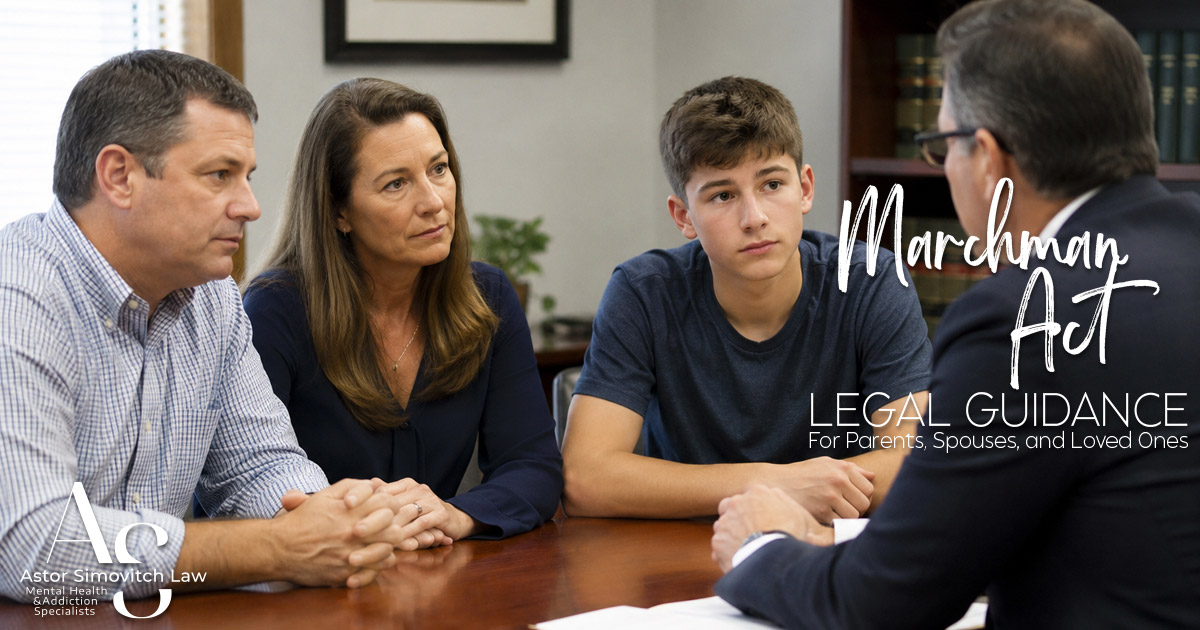
Watching a loved one struggle with substance abuse can be a difficult and overwhelming experience. When that individual refuses treatment, the situation can become even more disheartening, leaving families feeling helpless. However, there are legal tools that can help, such as the Marchman Act, a legal process that gives families a way to intervene in the cycle of substance abuse.
While the Marchman Act is designed to help prevent addiction from leading to irreversible consequences, it can also leave families feeling overwhelmed and confused. That’s where a Marchman Act attorney can offer valuable support, guiding families and loved ones through the process.
Understanding the Marchman Act
The first step is to understand the Marchman Act: what it is, when it is used, and the difference between voluntary and involuntary treatment.
What Is the Marchman Act?
The Marchman Act was passed in Florida in 1993 and establishes a legal framework for individuals struggling with substance abuse to receive the help and care they need. Voluntary treatment is the ultimate goal, but when an individual is unable to seek help themselves, the Act allows for a court-ordered assessment for involuntary treatment.
This structured pathway is designed to protect individuals who are unable to recognize their need for help, while allowing families to intervene when addiction becomes dangerous.
When Is the Marchman Act Used?
The Marchman Act is typically used when a person is struggling with substance abuse and refuses treatment despite clear signs of a problem. In these situations, the individual’s behavior may pose a risk to themselves or others. For example, there may be a risk of overdose, unsafe decision-making, or harm to themselves or those around them. Addiction can also lead to serious neglect of responsibilities, health, and personal safety, often resulting in devastating knock-on effects.
The Marchman Act only requires one person with direct personal knowledge of the individual to come forward and advocate for an individual, helping them find the help that they need for a person struggling with substance abuse. Ultimately, the person must be willing to come forward and testify on the substance abuse for evidentiary purposes. If the individual is a minor, then the petition can be filed by a parent, legal guardian, or service provider
Voluntary vs. Involuntary Treatment
To understand the Marchman Act, it’s important to know the difference between voluntary and involuntary treatment. With voluntary treatment, an individual agrees to seek help and participates willingly. In contrast, involuntary treatment involves a court-ordered assessment when the individual refuses help. In these cases, evidence is required to show that the person poses a risk due to substance abuse.
How Can the Marchman Act Benefit an Individual
Although the Marchman Act is an involuntary process, it is designed with the individual’s best interests at heart. It provides a pathway to treatment when they may be unwilling or unable to seek help on their own. The Act allows for early intervention and immediate access to treatment resources, sometimes involving relocation, helping prevent substance abuse from escalating into more serious health, legal, or financial issues.
Another benefit of the Marchman Act is that it ensures the individual receives a professional assessment, helping determine the level of care they need rather than leaving decisions solely to family members who may be emotionally involved. While the process is involuntary, it creates a structured and supervised pathway that prioritizes the individual’s safety and well-being.
In many cases, the Marchman Act can serve as a turning point, giving individuals access to support, stability, and a chance to begin recovery, even if there is initial resistance.
Essentially, the benefits of the Marchman Act can be described as follows:
- It provides a legal and court-supervised pathway for families to step in and support a loved one who is unable or unwilling to seek help for themselves.
- Provides access for court-ordered assessment and professional treatment when substance abuse presents a serious and life-threatening risk.
- As a structured and supervised process, the Marchman Act prioritizes an individual’s dignity and well-being while guiding them towards appropriate care.
- Prevents the risk of serious consequences such as overdose, incarceration, or repeated hospitalization.
- Offers a turning point and a chance to redirect towards recovery, even in moments of resistance.
What Role Do Families Play in the Marchman Act Process?
As the Marchman Act is an involuntary process, families and loved ones play an important role in getting support and offering stabilization. From a legal point of view, this is achieved in the following ways.
Recognizing the Need for Intervention
It is often those closest to someone who first notice the warning signs of substance abuse. Behavior begins to change, health declines, and daily life starts to shift in a downward direction. These early signs are often subtle, and families are more likely to pick up on them because they are closest to the situation.
For this reason, families and loved ones play an important role in recognizing when substance abuse has escalated to a dangerous level, often before the individual realizes it themselves. When resistance occurs, this awareness can prompt the decision to explore legal options for intervention.
Initiating the Marchman Act
Typically, family members initiate the Marchman Act by filing a petition with the court and requesting intervention. The process requires clear evidence of substance abuse, as well as a refusal to seek voluntary treatment.
For example, families may need to document patterns of behavior, specific incidents, or potential risks. With the support of a Marchman Act attorney, this petition can be effectively presented in court with the necessary evidence to make a case.
Provide Support through Treatment
Even when the process moves into the legal system, the family remains an essential source of support by providing encouragement, stability, and care. The importance of this support during such a challenging and uncertain time cannot be overstated, as it helps the individual feel less isolated and more engaged in treatment.
Working with Legal and Medical Professionals
Families play a key role in working alongside attorneys, healthcare providers, and treatment specialists to help their loved ones overcome substance abuse challenges. From ensuring appropriate care to helping all legal requirements are properly followed, family involvement helps ensure that the individual’s best interests and well-being are prioritized throughout.
Supporting Long-Term Recovery
The Marchman Act marks the beginning of a long road to recovery, and the role of families over time remains essential. Individuals battling substance abuse face ongoing challenges, and by encouraging continued treatment, maintaining a supportive environment, and holding them accountable, family involvement can make a meaningful difference in achieving sustainable recovery.
Professional Guidance You Can Trust
If you’re considering the Marchman Act for a loved one, you don’t have to do it alone. Having an experienced attorney by your side can make a significant difference, offering both legal guidance and compassionate support throughout the process.
At Astor Simovitch, our dedicated legal team is here to help you take the first step toward getting your loved one the care they need. Call us at 561-419-6095 to arrange a confidential consultation.